LIFE-SAVING ESSENTIALS
Life-Saving Essentials
Knowing what to do before help arrives can make all the difference.
First Aid · CPR · AED · Emergency Response
Talk to Us About Life-Saving Skills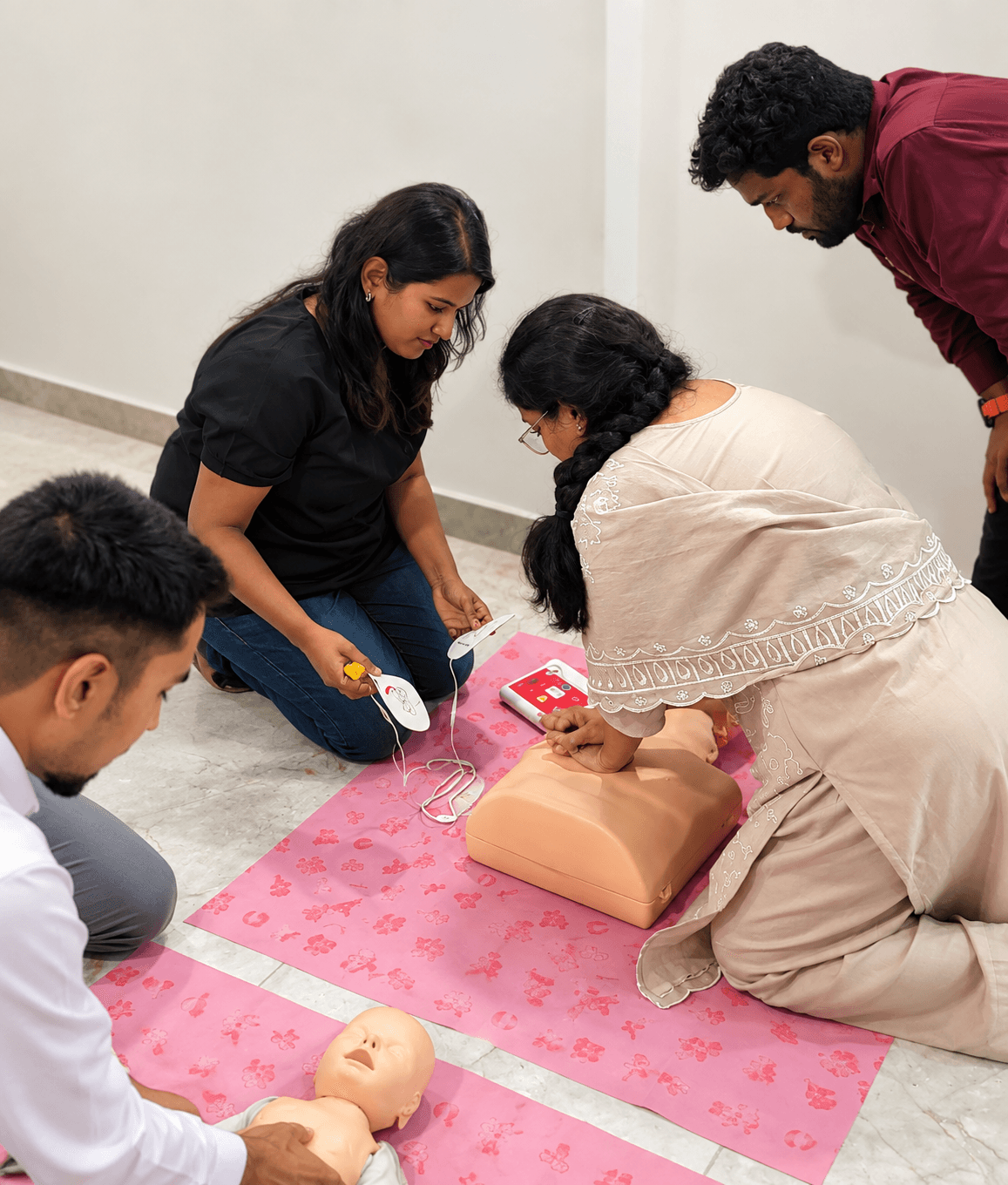
WHEN EVERY SECOND MATTERS
What happens between the emergency and professional medical care?
An ambulance may be on its way.
A hospital may be nearby.
But what happens in between?
Life-Saving Skills prepares people to recognise an emergency, respond appropriately, prevent further harm, and preserve life until professional medical care takes over.
You don't need to be a doctor to make a difference. You need to know what to do.
THE LIFE-SAVING ESSENTIALS PHILOSOPHY
Recognise. Protect. Respond. Activate Help. Preserve Life.
We don't teach participants to become doctors or rescuers.
We teach them to:
- Recognise what is happening.
- Protect themselves and the person from further harm.
- Respond with the right action within their level of training.
- Activate the appropriate professional help.
- Preserve life until professional medical care takes over.

That is the foundation of Life-Saving Skills.
LEARNING THAT GOES BEYOND THE DEMONSTRATION
Knowing is not the same as being able to do.
The real test comes when:
- Someone suddenly collapses.
- People around you start panicking.
- The emergency happens in an unfamiliar place.
- The equipment isn't immediately available.
- Or you have to make a decision under pressure.
That's why our learning combines:
- Demonstration
- Practice
- Scenario
- Assessment
- Correction
- Reassessment
Participants don't just watch. They perform.
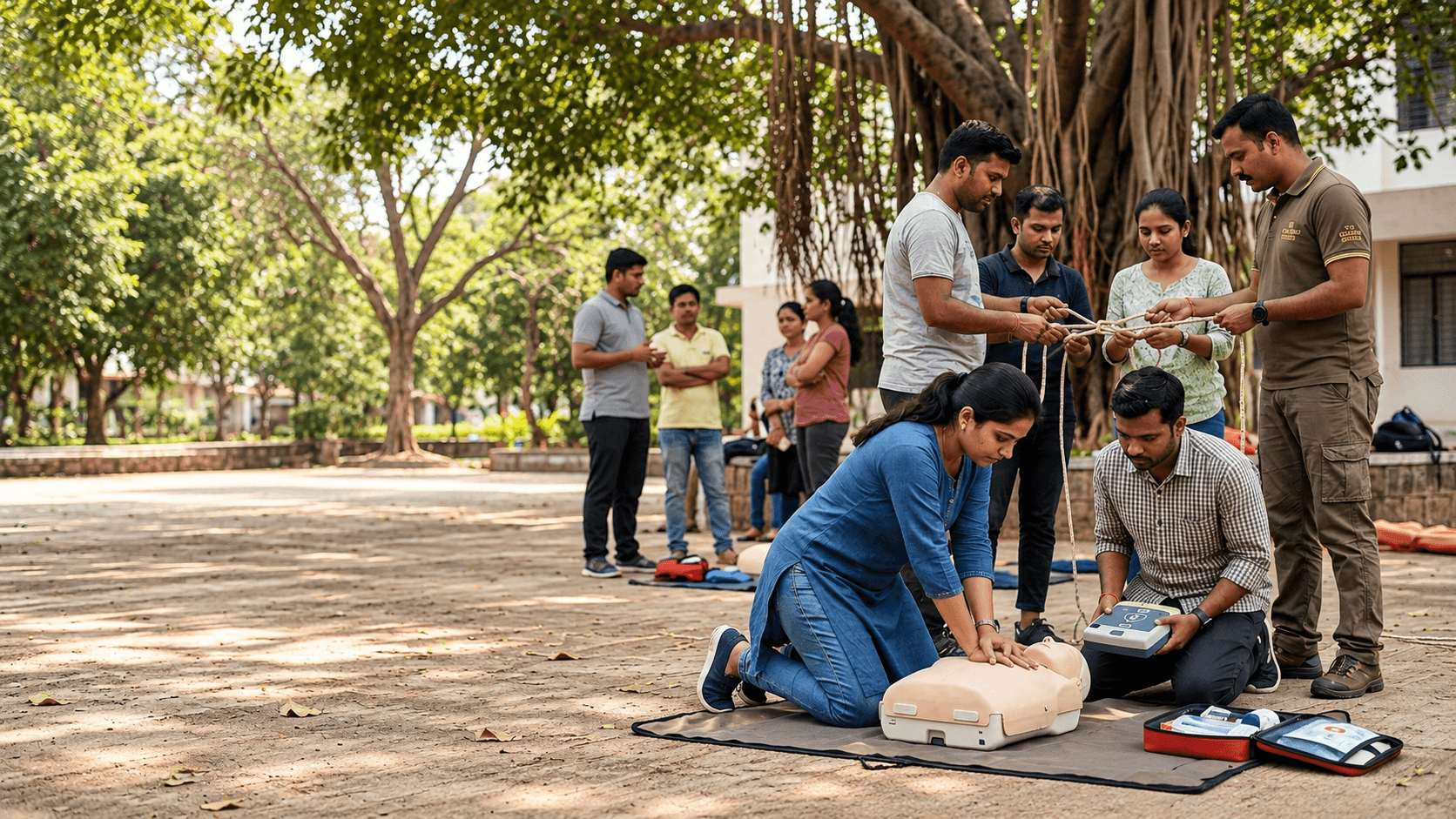
WHAT PARTICIPANTS LEARN
Rather than overwhelming participants with medical terminology, we focus on understanding, action and judgement.
CPR & AED
Understand cardiac emergencies and practise the essential steps to respond.
First Aid
Recognise common injuries and emergencies and learn how to prevent them from becoming worse.
Emergency Response Skills
Know how to assess the situation, call for appropriate help and respond safely.
Practical Decision-Making
Understand what to do, what not to do, and why.
WHAT THIS PROGRAM BUILDS
- Awareness
- Understanding
- Skill
- Judgement
- Confidence
Not everyone needs to become a responder.
But everyone can learn to recognise an emergency, avoid making it worse and know where to begin.
DIFFERENT PEOPLE. DIFFERENT DEPTH OF LEARNING.
Life-Saving Skills is adapted to the age, environment and responsibility of the participant.
School Students
Understand the basic science behind the human body, emergencies and appropriate response.
College Students
Go deeper into physiology, emergency response and hands-on life-saving skills.
Workforce & Adults
Focus on practical response, hands-on skills and making the right decision under pressure.
Institutions & Communities
Build a wider base of people who can recognise emergencies, respond appropriately and activate professional help.
AWARENESS OR TRAINING?
Awareness creates the first question. Training builds the capability.
Awareness Program
Introduces people to life-saving concepts and helps them understand that immediate action can make a difference.
Training & Certification
Participants learn, practise and demonstrate the required skills through hands-on and scenario-based learning. Where certification is offered, it is earned through demonstrated competency — not simply attendance.
WHAT SUCCESS LOOKS LIKE
A successful participant doesn't simply remember a procedure.
They can:
- Recognise an emergency.
- Stay focused enough to respond.
- Make the right decision.
- Perform the appropriate skill.
- Communicate and call for help.
- Avoid actions that could make the situation worse.
The goal is not confidence without competence. Competence creates the confidence to act when it matters.
THE GOLDEN CIRCLE DIFFERENCE
We don't teach for the certificate. We teach for the moment when it matters.
Participants are encouraged to ask:
- Why is this important?
- Why do we do it this way?
- What changes when the situation changes?
Because when an emergency doesn't follow the textbook, understanding becomes more valuable than memorisation.
WHAT STAYS AFTER THE TRAINING?
We want the participant to leave with more than a certificate.
We want them to carry a simple thought:
“If something happens, I know where to begin.”
That moment of clarity can prevent panic, prevent further harm and help preserve life.